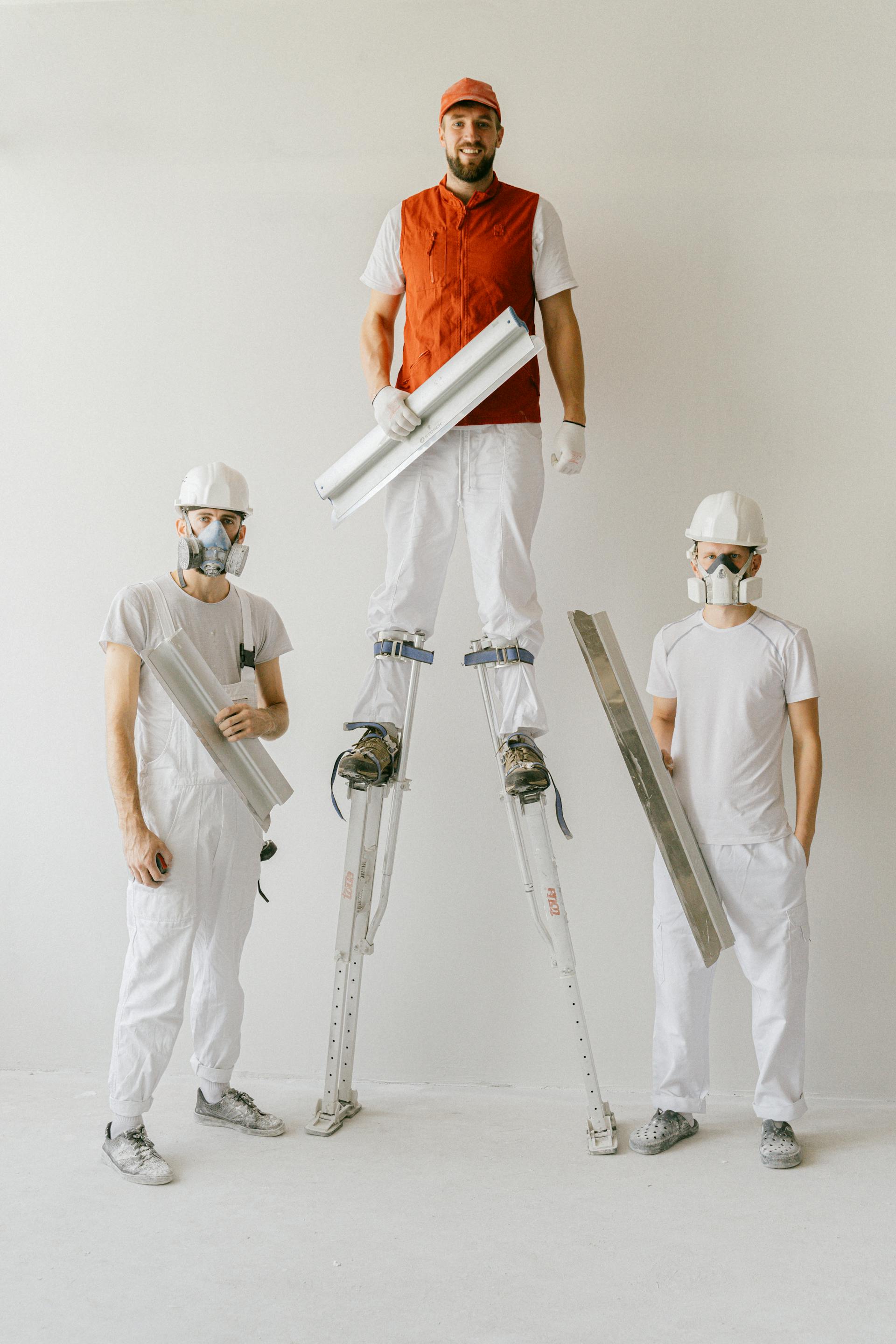
Drywall Plaquemine LA
Plaquemine sits on borrowed time with its drywall. Not because the work is bad, and not because the materials are cheap — but because this stretch of Iberville Parish throws everything it has at interior walls, year after year, in ways that contractors who've only worked the north side of Baton Rouge simply don't account for. The Mississippi River is right there. The bayou is right there. The air off Bayou Plaquemine on a July afternoon doesn't just feel wet — it is wet, measurably, relentlessly, and it has opinions about gypsum board.
We've done drywall work in homes from the Plaquemine Historic District all the way out along the Grosse Tete Road corridor, in older craftsman houses within walking distance of St. John the Evangelist Catholic Church and in newer builds out in Nottoway Park subdivision and Riverview Estates. The problems aren't identical from neighborhood to neighborhood, but the underlying cause usually is: moisture. Thermal stress. Flood events that strip walls down to the studs. And a building environment that demands more from drywall — and from the people installing it — than almost anywhere else in the continental United States.
This page is for Plaquemine homeowners and property managers who need straight answers about drywall in Plaquemine LA — what the work actually involves here, why it's different, what it costs, what the code requires, and how to find a contractor Plaquemine residents can actually trust to do it right the first time.
Why Plaquemine Is One of the Hardest Places in Louisiana to Keep Drywall Intact
Louisiana is hard on drywall across the board. But Plaquemine has a specific combination of factors that puts it in a different category from, say, a suburb off Airline Highway in Baton Rouge.
Start with the humidity. Average relative humidity in this area runs consistently above 70 to 80 percent — not just in summer, but year-round. Gypsum board is porous. It absorbs atmospheric moisture the way a sponge absorbs water, just more slowly and less obviously. Over time, that absorption causes joint tape to bubble and peel, corner bead to rust and stain, and the paper facing on standard drywall to soften enough that mold finds easy purchase. We've pulled panels off walls in Oak Lawn homes that looked fine from the front and were black with mold on the back. That's not a fluke. That's what happens when standard drywall gets installed in a climate like this without the right vapor management strategy behind it.
Then there's the flooding. Plaquemine's low-lying bayou terrain and proximity to the Mississippi River mean flood events aren't hypothetical — they're scheduled. Homes in Special Flood Hazard Areas along the Bayou Plaquemine waterway corridor and in lower-lying parts of the Iberville Terrace neighborhood have seen multiple flood intrusions in the past decade alone. A flood gut-out and rebuild isn't a minor repair. It's a full drywall tear-out from the floor up — typically removing everything from about four feet down, sometimes higher depending on water levels — followed by proper drying of the wall cavity, mold treatment of the framing, and reinstallation with moisture-resistant gypsum board. Done correctly, it takes time. Done incorrectly, you're doing it again in two years.
Hurricane season runs June through November, and Plaquemine doesn't need a direct hit to take damage. Tropical storm remnants and heavy rain events — the kind that drop six inches overnight — routinely cause roof leaks and window seal failures that send water straight into ceilings and exterior-adjacent walls. We've handled dozens of drywall repair calls that started with a customer saying "we just had some water come in during that last storm" and ended with us cutting out entire ceiling sections in Belle Grove homes because the damage had spread further than what was visible from below.
Summer heat compounds everything. When temperatures push past 95°F — and the heat index regularly clears 105°F here — the thermal expansion and contraction cycles stress drywall seams and fasteners in ways that show up as nail pops and hairline cracks along joints. It's not structural. But it looks bad, and it gets worse every summer if it's not addressed properly. Homes along the Maringouin Road residential corridor that back up to open fields get the full brunt of afternoon sun on west-facing walls, and those walls show it.
And then there's the termite pressure. Iberville Parish is in one of the highest-risk zones in the country for subterranean termites, particularly Formosan termites. We've opened up walls during what looked like a routine repair job and found framing compromised enough to require a structural conversation before any new board went up. It doesn't happen on every job. But it happens enough that any experienced drywall contractor working in Plaquemine should know what to look for and what to do when they find it.
Drywall Installation Plaquemine LA — What the Work Actually Involves
New drywall installation in Plaquemine — whether it's a room addition off the back of a house near Plaquemine High School, a full interior build-out in a new construction home in the Sunshine area residential neighborhoods, or a gut-and-replace after flood damage — follows a specific sequence that can't be rushed.
The process starts before a single panel goes up. Wall cavities need to be dry. In a climate averaging over 60 inches of annual rainfall — one of the highest figures in the continental U.S. — "dry enough" and "actually dry" are not the same thing. We use moisture meters on framing before installation. If the wood is reading above acceptable thresholds, we wait or we dry it out. Installing drywall over damp framing is how you get mold behind walls six months later, and that's a far more expensive problem than a short delay on the front end.
Board selection matters more here than almost anywhere. In bathrooms, laundry rooms, kitchens, and any wall that shares a plane with an exterior surface, proper drywall installation means using paperless fiberglass-faced board or, at minimum, mold-resistant gypsum board. Louisiana has adopted IRC Section R702 with state amendments that specifically require moisture-resistant gypsum board in high-humidity areas — this isn't optional, and it's not just a recommendation. In garages adjacent to living spaces, Type X fire-rated drywall is required under Louisiana code. We see that in a lot of the ranch-style homes in Belle Grove and the older neighborhoods near Iberville Medical Center where attached garages were added on over the years.
Hanging the board is the physical part most people picture. Panels go up on walls and ceilings, fastened to framing with screws at code-required intervals. Ceiling work is the most labor-intensive — it requires lift equipment for anything beyond a small room, and proper screw spacing matters because ceiling drywall is fighting gravity constantly. In Plaquemine's heat and humidity, fastener corrosion is a real concern, and we use corrosion-resistant screws on every job.
Then comes taping and mudding — the part that separates acceptable work from work that actually looks good. Tape goes over every seam and inside corner. Three coats of joint compound, minimum, with sanding between coats. Feathering the edges out wide enough that the transition from panel to panel disappears under paint. Rushing this process — applying coats too thick, not allowing proper drying time between passes — is how you end up with seams that telegraph through the finished wall, especially on walls that get raking light from a window. Finishing and texturing comes last: whether that's a smooth finish, orange peel, knockdown, or the heavier skip trowel textures common in older Plaquemine homes, the texture needs to match what's already on the surrounding walls if it's a repair, or meet the homeowner's preference if it's new work.
Drywall Repair Plaquemine LA — The Most Common Calls We Get
Full installations are a portion of the work. Repair calls make up the majority of what a drywall company near Plaquemine LA handles on a day-to-day basis. Here's what comes up most often:
- Water-damaged drywall replacement — ceiling and wall sections damaged by roof leaks, plumbing failures, or storm intrusion. The visible stain is never the full extent of the damage. We always cut back to dry, unaffected board before patching.
- Flood gut-out and rebuild — full tear-out of flood-affected drywall, typically from the floor up to four feet or higher. Includes mold remediation of framing, drying time, and reinstallation with moisture-resistant board. Common in lower-lying areas near the Bayou Plaquemine waterway and in parts of Iberville Terrace.
- Nail pops and seam cracking — caused by thermal expansion and contraction cycles, settling, or fasteners that were never driven to proper depth. More common in homes along the Grosse Tete Road corridor and in older construction near the Plaquemine Historic District. Usually a cosmetic repair, but persistent nail pops can indicate framing movement worth investigating.
- Hurricane damage repair — storm-related damage from wind-driven rain, window failures, or roof damage. Ranges from isolated ceiling patches to full room replacements depending on the extent of intrusion.
- Mold-affected drywall removal and replacement — discovered during renovation, after a leak, or during a routine inspection. Mold-resistant drywall goes back in. The underlying moisture source gets identified and addressed first — otherwise the new board develops the same problem.
- Impact damage and hole repair — doorknob holes, moving damage, accidental impacts. Small patches or full panel replacements depending on size and location.
- Joint tape failures — bubbling, cracking, or peeling tape caused by moisture infiltration or improper original installation. More common in older homes and in rooms with inadequate ventilation.
Permits, Codes, and What Plaquemine Homeowners Need to Know
This is where a lot of contractors — and a lot of homeowners — get into trouble.
Iberville Parish enforces the Louisiana State Uniform Construction Code, which is built on the International Building Code and International Residential Code. For most patch repairs and isolated drywall fixes, you don't need a permit. But the line shifts quickly. New construction, room additions, and major renovations including full interior gut-outs require a building permit from the Iberville Parish Building Department. If you're doing a flood-related gut-out and rebuild in a FEMA Special Flood Hazard Area, the substantial improvement rules under Louisiana's Flood Damage Prevention Ordinance may come into play — specifically the 50% rule, which can trigger full code upgrades if the cost of repairs exceeds 50% of the structure's market value. That's not a technicality. It has real financial implications, and it affects a meaningful number of properties in the lower-lying parts of Plaquemine.
Louisiana Act 1150 requires residential contractors performing work over $7,500 to be licensed through the Louisiana State Licensing Board for Contractors. Most full-room drywall installation jobs clear that threshold. For projects exceeding $75,000 in total value — which large-scale drywall and renovation projects can reach — a licensed contractor is required by state law. Iberville Parish participates in the National Flood Insurance Program, and flood-damaged drywall repairs that involve insurance claims carry their own documentation requirements. If you're filing a claim, the scope of work needs to be itemized and verifiable. We provide that documentation as a standard part of the job.
One more thing worth knowing: unlicensed contractors working in Plaquemine aren't just a legal risk — they're a practical one. Work done without permits can complicate a property sale, void a homeowner's insurance claim, or leave you holding the bill for corrections when the next inspector walks through. It happens. We've been called in to fix work done by unlicensed crews more times than we can count, and the repair bill is almost always higher than the original job would have been done right.
How Plaquemine Drywall Work Connects to the Broader Baton Rouge Area
Plaquemine is about 20 miles southwest of Baton Rouge, and a lot of the contractors serving this area work across both markets. Our Baton Rouge drywall operation covers the full metro region, and the same crews handling jobs in Plaquemine also work regularly in Gonzales and Denham Springs. That matters because it means the people showing up to your job aren't driving two hours from somewhere unfamiliar — they know the climate, the code environment, and the specific challenges that come with working in South Louisiana's river parishes.
The work itself doesn't change based on which side of the parish line you're on. Proper mudding technique, correct board selection, moisture management behind the wall — these aren't regional preferences. They're the difference between drywall that holds up for twenty years and drywall that needs to be redone after the next wet season. We apply the same standards in Plaquemine that we do everywhere else we work.
What to Expect When You Call
We don't do high-pressure estimates. You describe the job, we come out and look at it, and we give you a written scope of work with a clear price before anything starts. If we find something unexpected during the job — compromised framing, hidden mold, a moisture source that wasn't visible from the surface — we stop, show you what we found, and talk through the options before we proceed. No surprises on the invoice.
Response times for Plaquemine are the same as for the rest of our service area. Emergency calls — active leaks, storm damage, situations where walls are open and exposed — get prioritized. Standard repair and installation scheduling runs on a normal queue, and we'll give you a realistic timeline upfront rather than a date we can't hit.
If you're dealing with drywall in Plaquemine LA — whether it's a small patch, a full room installation, or a post-flood gut-out — call us or use the contact form on this page. We'll get back to you the same day.
Last updated: